Our Services
Expert trading solutions tailored for your energy needs.
Paper Trading
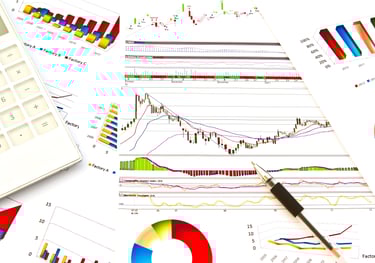
Our paper trading service supports clients who engage in futures, options, and derivative-based market strategies. We provide insights, trade execution support, and clear guidance on market structure to help clients optimize their positions.


Hedging
Through customized hedging solutions, we assist clients in securing predictable costs. We use market-based tools to stabilize pricing on petroleum products, enabling businesses to plan with confidence despite changing market conditions.
Risk Management
We help clients reduce exposure to market fluctuations by evaluating price trends, volatility indicators, and supply-demand patterns. Our structured approach ensures stable purchasing strategies and protects long-term profitability.
Hedging and Risk Management


Hedging is the practice of taking an offsetting position in a financial instrument to reduce the risk of adverse price movements in an asset. In institutional finance, this is primarily achieved through two distinct channels: Over-the-Counter (OTC) derivatives (governed by ISDA) and Exchange-Traded derivatives (Futures).
1. ISDA and OTC Risk Management
The International Swaps and Derivatives Association (ISDA) provides the legal framework for the "Over-the-Counter" (OTC) market. These are private, bilateral contracts negotiated directly between two parties (e.g., a corporation and a bank).
Customization: Unlike exchange-traded contracts, ISDA-governed swaps and options can be tailored to the exact needs of the hedger (e.g., specific dates, unique underlyings, or non-standard amounts).
The Master Agreement: This is a standardized "umbrella" contract. Once signed, the parties can enter into many trades (Confirmations) without renegotiating legal terms like default or netting every time.
Counterparty Risk: Since the trade is private, you are exposed to the risk that the other party might default. This is managed via the Credit Support Annex (CSA), which requires the exchange of collateral (margin) based on the trade's current value
Netting: One of ISDA’s greatest strengths is close-out netting. If a counterparty goes bankrupt, all trades are bundled into a single net value, preventing the bankrupt party from "cherry-picking" winning trades while defaulting on losing ones.
2. Exchange-Traded Futures Trading
Futures are standardized contracts traded on public exchanges (like the CME or ICE). They are used for risk management by locking in a price for a future date.
Standardization: You cannot change the contract size or expiration dates; they are "off-the-shelf" products (e.g., 100 ounces of gold, 1,000 barrels of oil).
Central Clearing: The exchange acts as the middleman. You do not have "counterparty risk" to a specific bank; instead, the Clearing House guarantees the trade.
Liquidity: Because they are standardized and traded publicly, futures are very liquid. You can enter or exit a hedge in seconds.
Daily Mark-to-Market: Gains and losses are settled daily. If the market moves against your hedge, you must immediately post "variation margin" to cover the loss.
FAQs
What products do you trade?
We trade crude oil and refined petroleum products including gasoline and jet fuel.
Where are you located?
Do you offer risk management?
How can I start trading with you?
What grades of fuel oil are available?
Our headquarters are based in Dubai, serving regional and global markets.
Yes, we provide tailored risk management and hedging services to help clients navigate market volatility confidently.
Simply contact our team through the website or phone to discuss your needs and set up an account.
We offer various grades of fuel oil tailored to meet different industrial requirements.

Contact Us
Reach out for tailored energy trading solutions today.
Reach out for personalized energy trading solutions!
For faster transactions, call us at or email us at
Phone
finance@mysan.ae
+971555123456
© 2023. All rights reserved.
Address
Office No. 205-356, Al Khubaisi, Deira, Dubai, UAE